Injection Molding Materials Guide

Properties, Application, Pros and Cons, Data Sheet for 27+ common plastic materials

⬇ Download Material List for 27+ Plastics
Select Injection Molding Material

How to Select Injection Molding Materials

Choosing the right plastic material is one of the most critical decisions in injection molding. The material affects not only the part's performance and appearance, but also the tooling cost, cycle time, and overall production economics.

With 27+ engineering plastics available, from commodity resins like PP and ABS to high-performance polymers like LCP and PPS, selecting the optimal material requires understanding each material's properties, processing characteristics, and cost implications.

Below is a comprehensive guide covering the most commonly used injection molding materials, their key properties, typical applications, advantages, and limitations.
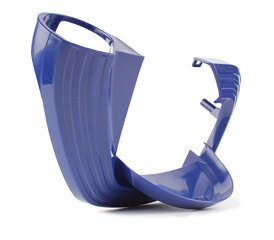
Common Injection Molding Materials

Explore detailed information about each plastic material we work with

ABS Part

ABS

Acrylonitrile Butadiene Styrene

ABS plastics provide a balanced combination of mechanical toughness, wide temperature range, good dimensional stability, chemical resistance, electrical insulating properties, and ease of fabrication.

→ Learn more
ABS/PC Part

ABS / PC

ABS + Polycarbonate Alloy

PC + ABS plastics offer improved strengths over ABS at a lower cost than Polycarbonate. Exceptional low temperature Impact Strength. Can be modified by the addition of glass fiber, mineral fillers and flame retardant.

→ Learn more
LCP Part

LCP

Liquid Crystal Polymer

LCPs are relatively new materials with interesting properties. They have tensile strength and modulus close to aluminum. Because of the highly oriented, rod-like nature of the polymer molecules.

→ Learn more
PA66 Part

PA 66 – Nylon 66

Polyamide

Nylons are semi-crystalline polymers with a good range of properties. They are widely used because they have a good cost to performance ratio. Lower numbered nylons absorb moisture and change their properties as a result.

→ Learn more
PBT Part

PBT

Polybutylene Terephthalate

PBT polyesters are semi-crystalline. They are versatile materials with a good range of properties. They have excellent electrical properties and are abrasion resistant. PBT has been extensively compounded giving a very wide range of properties.

→ Learn more
PC Part

PC

Polycarbonate

Polycarbonate is an amorphous material with excellent impact strength, clarity, and optical properties. It is very widely used and a wide variety of compounds are available. Polycarbonate has excellent mechanical properties.

→ Learn more
PP Part

PP

Polypropylene

Polypropylene is a widely used, semi-crystalline material. It has been extensively compounded to provide a wide range of properties at a wide range of costs. In general, polypropylene is a low temperature material with excellent chemical resistance.

→ Learn more
PMMA Part

PMMA / Acrylic

Polymethyl Methacrylate

PMMA is a tough, highly transparent material with excellent resistance to ultraviolet radiation and weathering. It can be colored, molded, cut, drilled, and formed. Acrylic is an economical alternative to polycarbonate when extreme strength is not necessary.

→ Learn more
POM Part

POM / Acetal

Polyoxymethylene

Acetal polymers are semi-crystalline. They offer excellent inherent lubricity, fatigue resistance, and chemical resistance. Acetals suffer from outgassing problems at elevated temperatures, and are brittle at low temperatures.

→ Learn more
PS Part

PS

Polystyrene Crystal

Crystal polystyrene is the cheapest thermoplastic available. It has properties to match its price. It is transparent and has good optical properties. It has very low Impact Strength.

→ Learn more
PVC Part

PVC

Polyvinylchloride

PVC is one of the oldest and most commonly used thermoplastic materials. The material is a colorless polymer of vinyl chloride. PVC can have numerous properties depending on the additives used in compounding.

→ Learn more
TPE Part

TPE

Thermoplastic Elastomer / Rubber

Thermoplastic elastomers (TPE) are a combination of polymers (usually a plastic and a rubber) which consist of both thermoplastic and elastomeric properties resulting in a product that is extremely easy to process.

→ Learn more

Material Properties Comparison

Key mechanical and thermal properties at a glance

Material Density (g/cm³) Tensile Strength (MPa) Flexural Modulus (MPa) Heat Deflection (°C) Relative Cost
ABS1.05402,30090
Low
ABS/PC1.12552,500110
Med
LCP1.6018015,000280
V.High
PA 661.14802,900100
Med
PBT1.31552,500160
Med
PC1.20652,400135
Med
PEI1.271053,000210
High
PMMA1.18703,00095
Med
POM1.41652,800110
Med
PP0.90351,50060
V.Low
PPS1.35854,000260
High
PS1.05403,00085
V.Low
PVC1.38502,50070
Low
TPE0.952050050
Med
TPU1.203560060
Med

List of Materials

All 27+ plastics we commonly work with for injection molding

Need Help Selecting a Material?

Our engineers can recommend the best material for your project based on performance, appearance, and budget requirements.

Get Material Recommendation

Ready to Start Your Project?

Get a free quote and design review from our engineering team.

Get a Quick Quote