
Design for Manufacturability: Key Principles for Plastic Parts
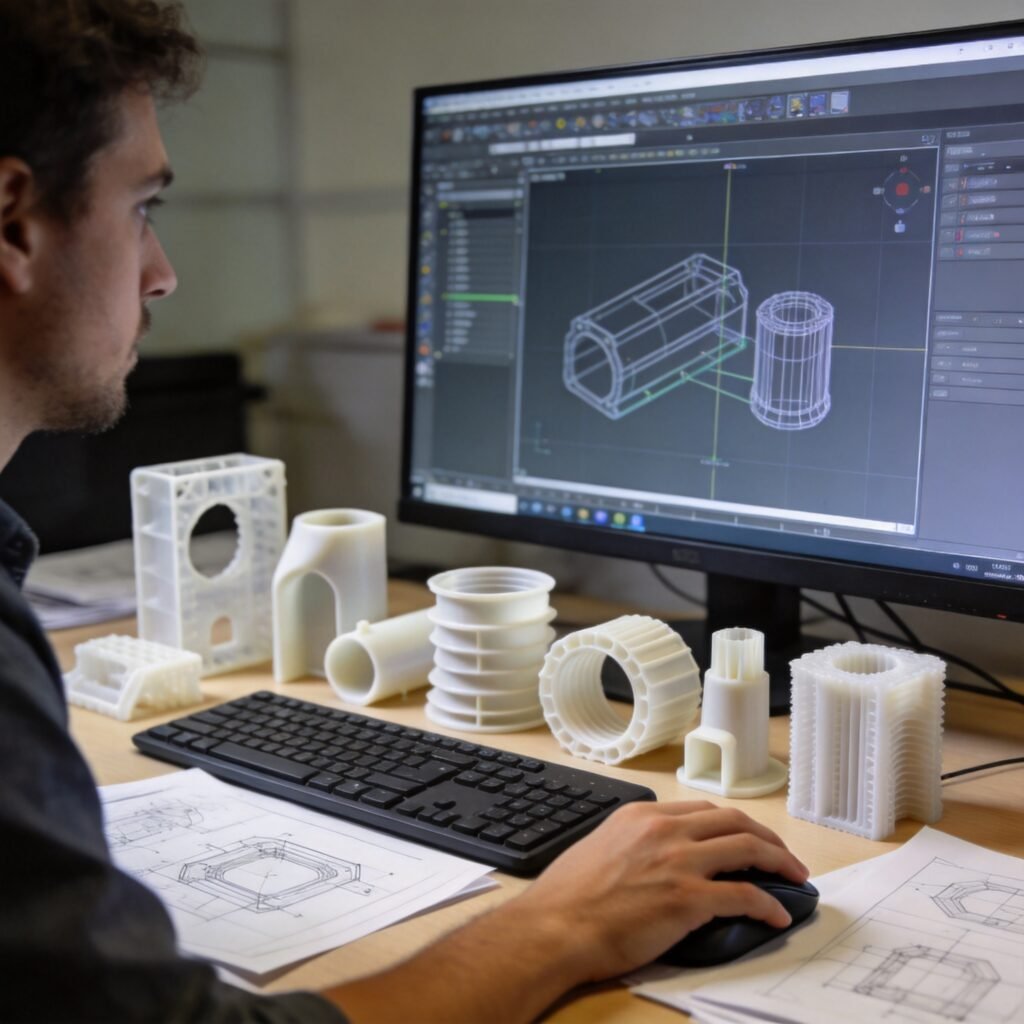
Design for Manufacturability (DFM) is the practice of designing products so they are easy and cost-effective to produce. Applying DFM principles to plastic parts lowers costs, improves quality, and speeds time to market.
1. Maintain Uniform Wall Thickness
Inconsistent wall thickness leads to sink marks, warping, and longer cooling times. Keep walls as uniform as possible and transition between thicknesses gradually.
2. Use Appropriate Draft Angles
Draft angles allow molded parts to release from the mold cleanly. Adding 1 to 2 degrees of draft on vertical walls reduces friction, prevents surface scratches, and shortens cycle times.
3. Add Proper Ribs and Bosses
Ribs add stiffness without increasing wall thickness. Use them sparingly and avoid forming thick sections. Integrate bosses for mounting points, ensuring adequate wall support.
4. Avoid Sharp Corners
Sharp corners concentrate stress and impede material flow. Use generous radii on both internal and external corners to improve strength and moldability.
5. Plan for Tolerances
Specify realistic tolerances. Overly tight tolerances increase manufacturing cost and reject rates. Communicate only the tolerances your application truly requires.
Conclusion
Effective DFM transforms good ideas into manufacturable, affordable products. Involving your molding partner early prevents costly redesigns and ensures your design is optimized for production.
Have a part to manufacture? Get in touch with our design engineering team.